
One of the most annoying skin problems we all have faced is pimples on the forehead. They are clearly visible, difficult to hide, and can affect your confidence. These acne may mostly appear during teenage years, but many people continue to experience them even as adults.
Hormone changes, stress, pollution, oily skin, and wrong skincare products are some common reasons behind this issue. This article will guide you in understanding the causes of these pimples and discuss effective home remedies for pimples on the forehead to manage and reduce breakouts effectively.
What is Forehead Acne?
Forehead acne is just like any other acne that appears on other parts of the face or body. When the small pores under the skin become blocked by excess oil, dirt, and dead skin cells, it leads to the development of forehead acne.
The skin contains oil glands called the sebaceous glands that produce a natural oil known as sebum. When these glands produce too much sebum, it can mix with dirt and dead skin, clogging the pores. When the pores are blocked, it can lead to bacterial growth and swelling, resulting in the formation of pimples, blackheads, or whiteheads.
Forehead acne is more common in people with oily skin, especially in the T-zone area, but it can affect any skin type.
Common Causes of Forehead Acne
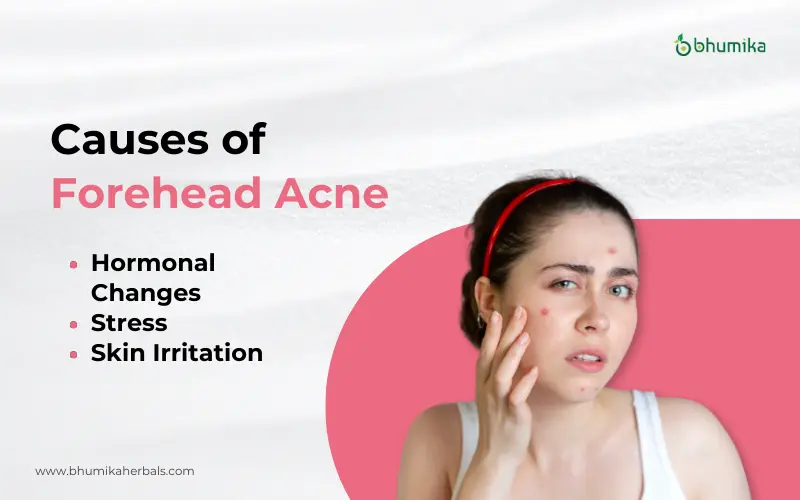
Listed below are several factors that can increase the chances of getting acne on your forehead.
- Hormonal changes: When your body undergoes changes in hormone levels, especially during puberty, it can increase oil production in the skin, leading to clogged pores and pimples.
- Stress: Stress does not directly cause acne, but it can make existing acne worse. When you are stressed, your body may produce more oil, which can trigger breakouts.
- Poor Cleansing Habits: If you do not wash your face or hair regularly, it will cause oil, sweat, and dirt to build up on your forehead, resulting in blocked pores and pimples.
- Pore-clogging products: Heavy or oily skincare and makeup products can block pores and lead to more breakouts.
- Certain medicines: Some medicines, such as steroids or other hormone-related drugs, can affect hormone balance and trigger acne.
- Skin irritation: Wearing tight hats, helmets, or frequently touching your forehead can irritate the skin and cause breakouts.
- Other Reasons for Forehead Acne: There are many other factors that may also lead to pimples on the forehead. Infected hair follicles, fungal infections, high-sugar diets, certain hair products, allergic reactions, and skin conditions like rosacea or folliculitis are a few among them.
Home Remedies for Pimples on Forehead
If you are wondering how to remove pimples on the forehead naturally, using simple home remedies can help control oil, reduce swelling, and keep your skin clean. These natural ingredients may support clearer and healthier-looking skin.
Tea Tree Oil
Tea tree oil, which exhibits anti-inflammatory and antibacterial properties, may help reduce mild to moderate acne on the forehead by calming redness and fighting acne-causing bacteria.
Ingredients:
- Tea tree oil- 1 to 2 drops
- Almond oil or any carrier oil- 1 teaspoon
- Cotton swab
Directions:
- Mix a few drops of tea tree oil with carrier oil.
- Dip a cotton swab into the mixture and apply it to the affected area.
- Leave it overnight and rinse in the morning.
How Often
Use this remedy once a day.
Tip: Tea tree oil may cause irritation for some people. So avoid using it if you are allergic or have very sensitive skin.
Zinc
The anti-inflammatory and antibacterial properties of Zinc may help reduce acne by fighting the bacteria that cause breakouts and by calming redness and swelling.
Ingredients:
- Zinc-based cream or gel
- Zinc supplements (only if recommended by a doctor)
Directions:
- Apply a small amount of zinc cream or gel to the affected area.
- Allow it to dry before using other skincare products.
- In more severe cases, a doctor may suggest zinc supplements.
How Often
Use once daily or as advised.
Tip: Do a patch test before use. Do not combine multiple acne treatments at the same time. If you have sensitive skin, consult a doctor before using zinc products.
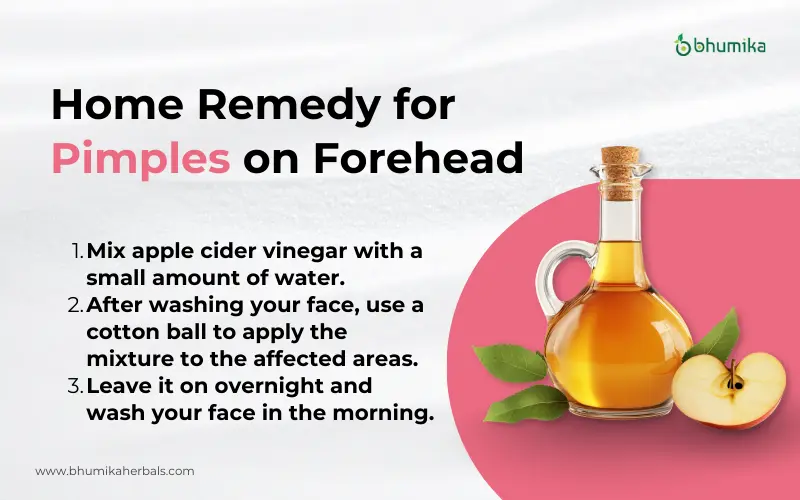
Apple Cider Vinegar
Apple cider vinegar, which is well known for its strong antibacterial and anti-inflammatory properties, may help fight acne-causing bacteria, reduce swelling, and support faster healing of pimples on the forehead.
Ingredients:
- Raw apple cider vinegar – 1 tablespoon
- Water – 3 tablespoons
- Cotton ball
Directions:
- Mix apple cider vinegar with water.
- After washing your face, dip a cotton ball into the mixture and apply it to the affected areas.
- Leave it overnight and rinse in the morning.
How Often
Use this remedy once a day or every other day.
Tip: Apple cider vinegar, if not diluted, can cause skin burns or irritation. So always dilute it before using it on your skin.
Lime Juice
Lemon, rich in vitamin C, has anti-inflammatory and antibacterial properties. When applied to the skin or consumed, vitamin C may help reduce acne and calm inflammation.
Ingredients:
- Lemon juice- 1 teaspoon
- Water- 2 to 3 teaspoons
- Cotton ball
Directions:
- Mix lemon juice with water.
- Dip a cotton ball into the mixture and apply it to your face.
- After leaving it on for 20 to 30 minutes, rinse with water.
- You can also drink a glass of fresh lime juice daily for added benefits.
How Often
Use this remedy once every two days.
Tip: Lemon juice may cause a burning or stinging feeling and can irritate sensitive skin. Avoid using it if you are allergic. Also, it can make your skin more sensitive to sunlight, so apply sunscreen before going outside.
Aloe Vera Gel
The antibacterial and anti-inflammatory properties of aloe vera gel may help reduce acne and pimples on the forehead. It can soothe the skin, calm redness, and support the healing process.
Ingredients:
- Fresh or store-bought aloe vera gel
Directions:
- Apply a small amount of aloe vera gel directly to the affected area.
- After 20 to 30 minutes, rinse with water.
How Often:
You can use this remedy once or twice daily for best results.
Tomato
Tomatoes are rich in vitamin C, and they have anti-inflammatory properties. They may help reduce acne on the forehead by calming redness and supporting clearer skin.
Ingredients:
- Fresh tomato – 1/2
Directions:
- Take one half of a tomato and rub it over your face, especially on the affected areas.
- After leaving the juice on your skin for 15 to 30 minutes, wash it off with water.
How Often
You can use this remedy once a day.
Azelaic Acid
Azelaic acid helps keep pores clean and may reduce both whiteheads and inflamed acne. Creams or ointments containing azelaic acid can improve the appearance of acne and make the skin look clearer.
Ingredients:
- Azelaic acid cream or ointment (as prescribed)
Directions:
- Apply a small amount of the ointment to the affected area.
- Allow it to dry completely before using any other skincare or makeup products.
How Often
Use it once a day or as advised by your doctor.
Tip: Do not use strong cleansers or astringents along with azelaic acid. Always do a patch test first to check for any allergic reaction.
Medical Treatments for Pimples on Forehead
If home remedies for pimples on the forehead are not enough, they can be treated with medicines available at pharmacies, which come in the form of creams, gels, ointments, or supplements. Benzoyl peroxide, salicylic acid, retinol, and resorcinol are some of the common ingredients found in over-the-counter acne treatments.
Benzoyl peroxide helps kill acne-causing bacteria. Salicylic acid reduces swelling and helps clear clogged pores. Retinol, which is a form of vitamin A, supports skin renewal and prevents pore blockage. Zinc supplements may also help control breakouts by reducing inflammation.
But it is important to always speak with a dermatologist before starting any medication.
How to Prevent Forehead Acne
To prevent forehead acne before it forms, keep your skin clean and follow a simple skincare routine. When you wash your face regularly, it helps remove dirt, oil, and pollution that can block your pores. Given below are some tips to help prevent breakouts on your forehead:
- Clean your face twice a day with a mild face wash.
- To exfoliate dead skin cells, use a mild scrub once a week.
- Always remove makeup from your skin before going to sleep.
- Skip using skincare or cosmetic products that can clog pores.
- Reduce the intake of sugary foods, processed items, chocolate, and excess dairy. Include foods rich in omega-3 and antioxidants in your meals.
- Take a shower after heavy workouts to remove sweat and oil.
- Keep your hair clean and try not to let it fall on your forehead often.
- Wash pillow covers and towels regularly.
- Avoid using tight caps, helmets, or headwear that rub against your forehead.
- Do not stay in direct sunlight for long hours.
- Drink enough water and eat a healthy, balanced diet.
The Bottom Line
When the pores on your skin become blocked with excess oil, dead skin cells, dirt, and bacteria, forehead pimples are formed. Hormonal changes, stress, poor skin care habits, heavy cosmetic products, and certain medicines are some of the causes that lead to these breakouts. Even though pharmacy treatments such as benzoyl peroxide, salicylic acid, retinol, and resorcinol may help, many people prefer home remedies for pimples on the forehead.
Try natural remedies for forehead acne, such as aloe vera, tea tree oil, lemon juice, green tea, apple cider vinegar, and tomato, to support clearer skin. Follow a proper skin care routine and stay consistent to manage forehead pimples.
Related Topics
| Ayurvedic Acne Treatments | Oily Skincare Routine |
| How To Remove Blackheads Naturally | Open Pores Treatment at Home |
Frequently Asked Questions on Pimples on Forehead
Why do I get pimples only on my forehead?
Pimples are mainly caused on the forehead because this area is part of the oily T-zone. The pores get blocked with extra oil, sweat, and dirt, which can lead to breakouts. Certain hair products like oils, gels, or creams may also touch the skin and trigger pimples. Stress and hormonal changes can increase oil production and cause more acne on the forehead.
Are forehead pimples hormonal?
Yes, hormonal changes can lead to pimples on the forehead. During puberty, menstrual cycles, or conditions like PCOS, the body may produce more oil, which can clog pores and cause breakouts. Sweat, stress, and certain hair products may also contribute to acne in this area.
How long do forehead pimples last?
Mild forehead pimples usually go away within 3 to 7 days. Larger, painful, or deep pimples may take several weeks to heal. If not treated properly, some pimples may last longer.
Can dandruff cause forehead acne?
Yes, dandruff can contribute to pimples on the forehead. Flakes from the scalp may fall onto the skin and block pores. The fungus associated with dandruff can also spread to the forehead, leading to irritation, small bumps, and itchy breakouts.
Should I pop a forehead pimple?
No, it is not recommended to pop a forehead pimple. Popping can push bacteria deeper into the skin, worsen swelling, and increase the risk of scars, dark spots, or infection.