
Coriander is a kitchen staple that needs no introduction. Found in almost every Indian home, this herb adds flavour to our food and has been used in cooking and Ayurveda for centuries. Packed with vitamins, antioxidants, and essential oils, coriander improves heart health, reduces inflammation, and helps detoxify the body.
In this article, you will learn about the top coriander benefits that make this everyday herb so special.
Coriander, with the scientific name Coriandrum sativum, is an aromatic herb used all over the world. It belongs to the Apiaceae plant family. The leaves, stems, and seeds have a strong smell and are used fresh or dried in many dishes.
In India, the leaves and stalks are called dhaniya, while in many Western countries they are known as cilantro or Chinese parsley. The seeds of the plant are small, round, and brown. They can be used whole or ground into a powder and added to many dishes to enhance their flavour.
Coriander Benefits
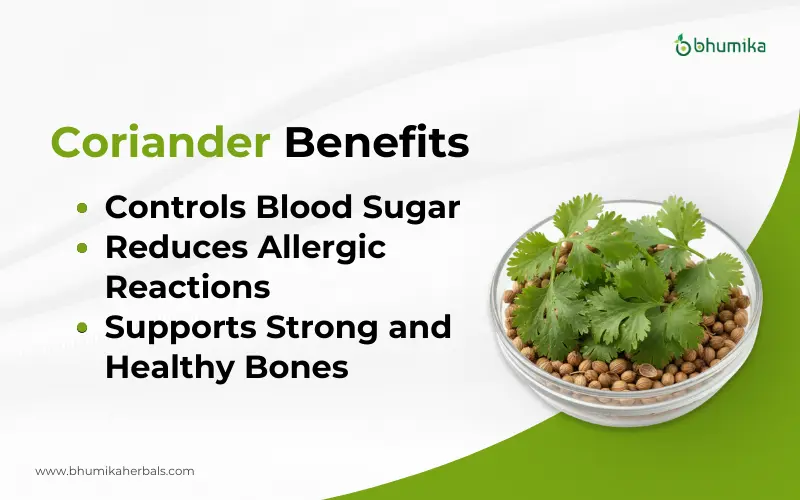
Coriander is a fragrant herb packed with powerful nutrients that support overall wellness. It can support heart health, regulate, prevent anemia and much more, which makes it a valuable addition to your daily routine. Here are some of the most notable coriander health benefits you should know about.
Controls Blood Sugar
As coriander leaves are rich in fibre and a little protein, they can help keep your blood sugar levels steady. Drink a small glass of coriander juice mixed with lemon and honey to reduce hunger, support weight loss, and manage diabetes symptoms.
Reduces Allergic Reactions
Coriander exhibits antihistamine properties that can help ease seasonal allergies and symptoms like itching, hives, or throat irritation. The essential oils in coriander are rich in antimicrobial and antioxidant compounds, vitamin C and iron, which may help prevent different types of allergies.
Supports Strong and Healthy Bones
Coriander is abundant in calcium and other nutrients that can help build strong bones. It also contains compounds like cineole, which possess anti-rheumatic and anti-arthritic effects, that can help reduce swelling and discomfort caused by conditions such as arthritis, anaemia, or kidney issues. People dealing with weak bones or osteoporosis may benefit from using coriander. The stem area of the leaves is especially rich in calcium.
Keeps Blood Pressure Under Control
Coriander relaxes the blood vessels and supports healthy blood flow, which in turn helps bring down blood pressure levels. It also lowers the chances of heart problems like stroke or heart attack.
Supports Healthy Liver Function
Coriander leaves contain plant compounds that can help the liver work better, which may help treat problems like jaundice and other liver issues. Coriander also helps the body remove toxins by increasing urination, thus promoting liver and kidney health.
Boosts Heart Health
Coriander contains natural acids and nutrients that can help keep cholesterol levels in balance. It can help increase good cholesterol and reduce bad cholesterol in the body. By doing so, coriander prevents cholesterol from sticking to the walls of your arteries and lowers the risk of heart problems like stroke, heart attack, and blocked arteries.
Relieves Diarrhoea
By improving digestion and supporting liver function, coriander can ease diarrhoea. It contains natural oils, like borneol and linalool, which help fight harmful germs and reduce nausea, vomiting, and stomach discomfort.
Good for Eye Health
Being rich in vitamins A, C, E and antioxidants, coriander leaves can keep your eyes healthy. Among the major coriander leaves benefits, their ability to support better vision and help with issues like conjunctivitis and age-related eye problems is noteworthy.
Prevents Anaemia
Coriander is rich in iron, which is highly beneficial for people dealing with anaemia. It helps the body produce enough blood, reduces tiredness and weakness, and prevents a faster heartbeat. The nutrients in coriander offer better energy levels and overall body strength.
Soothe Mouth Ulcers
The compounds like citronellol in coriander exhibit antiseptic and antimicrobial properties. Thus, coriander helps heal mouth ulcers, keeps germs away, and reduces bad breath.
How to Use Coriander?
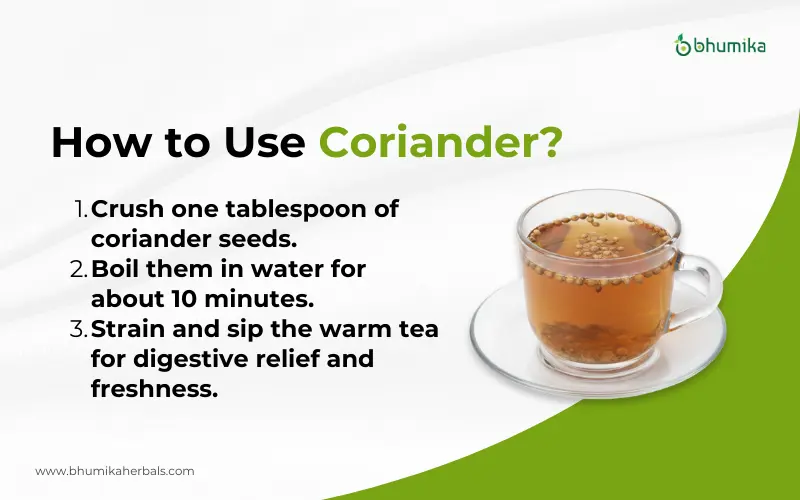
There are many different ways you can add coriander to your meals, and here are a few simple ways:
- Add to dishes: Chop fresh coriander leaves and add them to soups, salads, and curries to bring flavour and nutrition to your food. You can also grind coriander seeds into a powder and use them as a spice in everyday cooking.
- Coriander Essential Oil: Coriander oil can be used for aromatherapy or applied on the skin when mixed with a carrier oil. If you want to consume it, make sure to use a safe, food-grade oil.
- Coriander Tea: Boil one tablespoon of crushed coriander seeds in water for about 10 minutes. Strain the water and drink it warm to help with digestion and feel refreshed.
- Coriander-Infused Water: Soak a teaspoon of coriander seeds in water overnight. Strain and drink it in the morning to manage sugar levels and support metabolism.
- Herbal Mix: Coriander seeds can be used with other spices like fennel or cumin to make teas or infused water that can help reduce bloating, cramps, and stomach discomfort.
Wrapping Up
Coriander is a powerful natural ingredient valued in Ayurveda for its healing properties. From helping digestion and managing diabetes to supporting heart health, skin health, and strong bones, coriander benefits the body in many ways.
Fresh leaves, seeds, and coriander powder are available everywhere and can be used throughout the year, so you can easily include them in your daily diet for a healthier lifestyle.
Related Topics
| Cumin Seeds Benefits | Cardamom Health Benefits |
| Benefits of Ashoka Tree | Jowar Benefits |
Frequently Asked Questions on Coriander Benefits
Can coriander support kidney health?
Can I drink coriander water every day?
Is it good to eat coriander every day?
What are the benefits of coriander?

It is not very common to notice white patches on...Read More

Pimples are a common skin concern that comes with endless...Read More

Honey is a common ingredient available in most households, used...Read More

Tadasana, also known as the mountain pose, is considered the...Read More

Blemishes can appear as dark spots, acne marks, or red...Read More

Have you ever looked in the mirror, noticed those tiny...Read More

Today, we are busy with a hectic lifestyle, and it...Read More
Coriander is a kitchen staple that needs no introduction. Found...Read More